Personal Growth

As people living in this world, we should really strive to be better for ourselves, family, community and the environment.

Financial Education

Money is a tool that helps in your every day wants and needs. How to handle it is something that a lot of people need especially the poverty strickened.

Financial Seminars and News

Any opportunity to learn about finances, I'll give you the latest update.

Business

Hear about new business opportunities and businesses that are booming now.

Health

Also important in ourselves is health.

Tuesday, October 17, 2017

Warning on Pluggle


WARNING TO PEOPLE WHO PROMOTE PLUGGLE
Some people have invited me to join PLUGGLE and I asked them this simple question: What products or services are you selling? They just give me a simple answer that its advertising the website.
I was thinking in the lines of paid to click ads with additional payment for referrals like I did before but it seems it is not. I tried registering using my dummy email (you can register without paying the 1000) and looked at the layout of the website looking for signs of advertisements but I really can't find anything other than the usual binary structure prevalent in Multi-Level Marketing and pyramiding scams. One of the key differences between the two is that the former has products and services to offer while the latter has not. This raised my eyebrow and began really doubting the legitimacy of this company.
I kept on refusing to join as I was skeptical at this point and someone tried convincing me that it is not a scam since his 1000 investment had already gained. I recall EmGoldex had returns for their investors, and look what happened to it now. Return of Investment is not really a good case for the legitimacy of a company.
Then comes the warning from SEC (see the picture below) which has really proven that this company is to be avoided at all cost. The part that concerns me the most is this: "Consequently, those who act as salesman, brokers, dealers or agents of
PLUGGLE, INC., in selling or convincing people to invest in the investment scheme being
offered by PLUGGLE, INC. including solicitations or recruitment through the internet
may likewise be prosecuted and held criminally liable under Section 28 of the Securities
Regulation Code and penalized with a maximum fine of Five Million pesos
(P5,000,000.00) or penalty of Twenty One (21) years imprisonment or both pursuant
to Section 73 of the SRC.
Accordingly, those who invite or recruit other people to join or invest in this
venture or offer contracts or securities to the public may be held liable or accordingly
sanctioned or penalized in accordance with the Supreme Court decision in the case of
SEC vs. Oudine Santos (G.R. No. 195542, March 19, 2014)."
I am concerned for my friends who have posted about joining this company. Friends, you might face possible jail time and a huge fine if you don't remove any traces of pluggle in any form of internet posting. One screenshot and I fear the worst for you.
I have friends and colleagues from International Marketing Group (IMG) who have been called arrogant and other insults for posting against this company. In IMG, we spread financial literacy and part of which is to avoid getting into get-rich-quick schemes and scams that can obstruct your financial goals and assuring your hard earned money will be used properly and legally. We do not posts because we are stopping you to earn additional income, as a matter of fact we encourage you to do it as long as it is legal. We are posting against Pluggle because we care about your well-being and make sure you are not another victim of manipulative and opportunistic people. I hope you are enlightened by my posts.


Tuesday, October 10, 2017

Let's Trade. Stock Trade.


This September 2017, we held our first talk about Stock Trading in our Financial Center in JY Square. Lahug, Cebu City.

This was the first exclusive talk about Stock Trading in Wealth Academy. It was exclusively available to attendees of The Why Generation seminar. The theme was Game of Thrones and Fantasy so it was kind of interesting to me.

First session was about the Basics of the Stock Market.


There we learned about the terms to know about the stock market and stock trading.


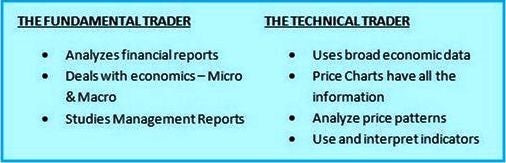
Second session was about knowing what type of trader you are and how to navigate an online stockbroker in your computer. I'll give a dedicated post about this one.

source: http://www.investopedia.com/


Since we can't really used actual online stockbrokers, we used investagrams for practice as it is free and it only uses paper money to trade as trial so no risk on our part.


If you are interested in learning about Stock Trading, try attending first our Building Your Future Orientation or our Behind The Why Generation Seminar for millennials. The latter serves as prerequisite to the Stock Trading session. Just message me on how to attend these seminars and I will be glad to help you in your financial goals.

Tuesday, September 26, 2017

Friends, Influence, and Leadership P1: Let's Handle People the Right Way!


One book that I wished I have read earlier in my life is "How to Win Friends and Influence People" by Dale Carnegie. I never really considered reading this book as, for me, was too old (meaning published before the 1950s) and might be outdated with today's modern society (by that, I mean the 2010s if you're reading this in the future). I thought, I've read Napoleon Hill's Think and Grow Rich (a book also published before the 50s) and I've learned a lot of things from that book, might as well read Carnegie's. As I opened every page of this wonderful book, I only had resentment towards myself for not reading it earlier in my life. Truly it help my perspective in looking at people. I would definitely recommend this for everyone. 

As for the purpose of this post, it is entitled Friends, Influence, and Leadership P1 since this will be a first part summary of what Carnegie has taught in that book conveniently listed for the ease of the readers. The first part will be about Handling People. I'm sure a lot of us don't really have the people skills that are apparent in others. But in actuality, we do have those skills, we just need proper and constant guidance and  concepts that are simple enough yet never came to our minds (or hesitant to do) to apply.

Carnegie presented 3 principles in handling people.

Principle 1 - Don't criticize, condemn, or complain.
You can probably call humans as naturally egotistic species and won't easily admit mistakes (we do, but it does pain us to do so). When someone criticizes us, most of us go on the defense and spite the critic. Complaining also will not persuade anyone in doing anything.Condemning? Don't even try.


Principle 2 - Give honest and sincere appreciation. 
Complaining is abundant in this world that we live in and appreciation is something of a rarity. Not a lot of people think it is one of the most powerful tools in this world. Try telling a janitor that he is not doing a good job and he will not work to his full potential because of being unappreciated. Now try praising that janitor and he will clean the whole room like germs don't exist in this world. But of course, you have to be sincere in giving appreciation. Add it with meaning and love or else it is just lip service.

Principle 3 - Arouse in the other person an eager want. 
Basically it is not thinking only of your own interests but others as well. Make it a Win-Win situation for the both of you. If you are selling something tell him what he wants. Don't tell him what you want. He has no interests in what you want.

I hope you learn from this article. If you want to get a copy of How to Win Friends and Influence People you can shop for it online or go to your nearest bookstore. I hope this helps.

Wednesday, September 20, 2017

Difference between Increase Income vs Increase Cash Flow


Johnny Marasigan was happy. It was pay day. 2 weeks before that his boss told him his salary had increased due to his exceptional performance in his department and tenure in the company that is on going for 5 years. His Salary of ₱25,000 became ₱30,000. "Finally!" he says in relief, "I can finally save money!" as he could not save money in his previous salary because of a mix of expenses and lifestyle. His spending habits would equate the amount of his previous salary. His income increased, yet, after a week, he is almost out of money and can't save just like his previous salary.

What do you think was wrong?
The simple answer: As his salary increased, his lifestyle also increased along with it. Johnny Marasigan decided to go clubbing every night with friends and buy branded clothes, confident that he still would have savings from his new found lifestyle. Yet, here he is still in the same situation before.

A lot of people would assume an increase in income is also an increase in cash flow, but those two are quite different.

What's the difference between Increase Income and Increase Cash Flow?

The simple difference between the two is that an Increase Income only involves your income and not really factoring your expenses and spending habit.

While the simple formula for Cash Flow is Income - Expenses = Cash Flow. Your spending habits, lifestyle, and expenses are involved in the formula to determine the amount of money that is left to save.

How to Increase Cash Flow?

There are five things I can tell you that would be of help:

1 Lessen Your Expenses and Lifestyle
This one is obvious but not too obvious apparently. For example, if you are paying 2,000 pesos for your internet service and you are just using internet for facebook and emails, you might consider getting a lower price plan. Most internet service providers offer 990 plan. For your lifestyle, you have to ask if you really need these things or find a cheaper alternative to what you want. Why buy an expensive white T-shirt when you can just buy one for 150 pesos in department stores.

2 Increase Your Income
As Johnny Marasigan did (minus the expensive lifestyle), he increased his income through rewards of his hard work and generally being a good and loyal employee to his company. If you can't see yourself increasing your cash flow any time soon in your company, get a sideline or part-time job to go above your expenses. A combination of lessening your expenses and lifestyle and and increased income will give you the savings you desire.

3 Pay off Your Debt
For those who have existing debts whether friends or company, it is better to pay your debt before considering saving a lot of money. Interests charges of these debt could lower your chances of a positive cash flow. try also consolidating debts like getting a personal loan to pay off your credit card debt. Personal loans have lower interest rates compared to credit card interest.

4 Track Your Income and Expenses
This is something that is needed but a lot of people seem to forget. It helps you monitor if your cash flow has increased or decreased so that you can be aware of your action plan for your next step in bringing it to the positive. You can make an excel file or a smartphone app that specifically does this. There are a lot of those in google play store.

5 Discipline Yourself
This is the most important part of increasing your cash flow. You can't exactly do anything about numbers 1-4 if you don't have the discipline to take action and avoid necessary liabilities in your wallet. Have a Whypower for saving. Write down your reasons in saving. Meditate on yourself. Pray to God Anything that can help your mental state (by anything, I mean anything not illegal or unethical).

Any problems with your cash flow? Try attending our free Building Your Future Orientation. Just comment below or send me a message in my facebook account.

Tuesday, August 22, 2017

A Financial Seminar with Chinkee Tan

My friend texted me about a financial seminar by Chinkee Tan in Talisay City, Cebu. At first I was skeptical since the venue was the office of J810 Construction, a construction company in Talisay, and Chinkee never mentioned in his social media accounts that he will be in Cebu. Plus I only learned about it a week before the seminar. Then again, my friend is not really the type to prank me and she is very serious about finances so why the heck not.

 It just took me a jeep and 2 tricycle rides to get there (It's only 1 tricycle ride but since I was not familiar with the area, I went pass my location). As I trek the unpaved road to the construction office, I gladly saw a tarpaulin ad of Chinkee Tan. The guard and caretaker in front of the gate happily welcomed me inside their vicinity. They let me in a small part of their building which was actually a chapel converted into a meeting room. I waited for about half an hour and lo! Chinkee Tan entered the room.


Skipping my narrative to the seminar, we will be starting with what he was talking about. These are just quotes and the gist of these quotes basing on what I learned. This does not comprise entirely of his talk.

"You can never win in life with a Defeated Mindset."

Chinkee Tan has always promoted a positive mindset (thus his moniker Mr. Chink Positive!) in his books, talk shows, and seminars as a key for financial freedom and I totally agree with him. People are always inclined to think in the negative, never thinking about solutions that can surpass their current and future problems to the point that they will not take action or settle for things they know they are capable according to their perceived limit. This is bad since this can cause debt problems, family problems, and emergency problems.

A positive mindset sets yourself ready (mentally, physically, and spiritually) for any problems you may encounter. One obstacle won't deter you from pursuing your goals because you have a goal and you are determined to reach it. You have that never quit attitude that leads to success at the end of the road.

"Ang pera hindi kayang baguhin ang tao, pero ang pera ay makapagpalabas ng tunay na ugali ng tao." (Money cannot change a person, but it can show the real personality of a person)

Do you ever have that friend that asks you for money to pay off some things like a humble dog with cute puppy eyes then suddenly becomes arrogant and boast about his wealth because suddenly he has a lot of money? You would definitely say money changed him, but the truth is, that friend was always arrogant and boastful even when he didn't have any money. That's how money works on personality. It shows you what you really are inside. Note: This applies to positive personality like being generous for example.

"Ang taong nasaktan, sumasakit ng ibang tao." (A person who was hurt, hurts others)


#Hugot much, right? The truth is everyone who was ever felt wronged will sometimes reciprocate it on others. It's not logically and morally sound but those are realities of life. If you feel society has done you wrong, you would try and take a jab on society. I'm not promoting this type of behavior, by the way. Remember that Defeated Mindset? People who espouse such behavior have this type of mindset. Winners would convert the pain into something good for them and the people around them.

"Stop comparing yourself to people"

We have that moment were we feel jealous towards another person for having this and not having that. Then we start comparing and mostly the comparison derogates us and praises the other person. We now feel low and the other person is like an immortal god with features unattainable. 

We just have to stop with this train of thought.Sure that person has something to desire but being jealous and saying "that won't happen to me" won't do you any good. You are a unique person, start thinking positive about what you have rather than don't have and then cultivate that positive attribute into something awesome.

"Ang Ginoo na ang bahala." (Let God take care of it.)

I like to clarify that this is not a reason to lie down in bed all day and God will  miraculously  solve all your problems for you without you doing any effort. God says in James 2:14-17

14 What good is it, my brothers and sisters, if someone claims to have faith but has no deeds? Can such faith save them? 15 Suppose a brother or a sister is without clothes and daily food. 16 If one of you says to them, “Go in peace; keep warm and well fed,” but does nothing about their physical needs, what good is it? 17 In the same way, faith by itself, if it is not accompanied by action, is dead.

What I'm simply telling you is if you have problems, reach out to God for help. After all in 1 Peter 5:7  says

7 Cast all your anxiety on him because he cares for you.

That's about what I can give to you during that seminar. If you want to know the latest update on Chinkee Tan, you can visit his website: www.chinkeetan.com

Also, I'd like to thank J810 Construction for hosting and allowing me and my friends to listen to Chinkee Tan for a small price.

If you have questions, you can comment or send me a message through my social media accounts. I hope you learned something.


Monday, June 26, 2017

Giving Up 1 Bad Habit Can Give You Millions

Hello, Readers. I haven't blogged for a while because of a hectic schedule but I'm back in writing and writing more for my blog.


On today's post, I noticed some of my friends wanted to give up on their bad habits and finding ways to escape. Well, today I'm going to post about something that can motivate them. Investing!

How do you mean?

If you invested your money (e.g. stocks, mutual funds etc.) instead of buying the usual things that prompts your bad habit, you can earn millions.

For example:

If you are a smoker and likes to buy 1 pack of cigarette that cost Php 80 every day in a month that'll cost you about Php 2,400. If you invested that Php 2,400 in the stock market every month for 15 years with a 12% interest rate, it'll give you a return of Php 1,215,631.03 in 15 Years!  By the way, I specifically chose 15 years as, according to studies, if you stop smoking for 15 years your body returns to normal as if you didn't smoke. You got your health back and you have 1 million!

But of course, I leave you to choose: a million pesos in your bank or a trip to the ER for lung cancer.

Don't know about you but the former seems like a lucrative offer.

I hope this can motivate you.

Wednesday, February 24, 2016

A free Survery for Understanding the Finances of Families

IMG is a financial distribution company that helps in people understanding their finances. I would like you to be a respondent for a survey that we are conducting. Please participate.
Thank you for participating in our survey. Here's a puppy for your time.

http://www.fanpop.com/


Thursday, April 23, 2015

The Rule of 72

Many know the name Albert Einstein.

Not Miley Cyrus.

Known as the father of modern physics, His contributions has greatly improved the field of science such as The Theory of Relativity and The Theory of Special Relativity. Could easily be one of the greatest man that ever lived.

But what does Albert Einstein got to do with finances?

It has something to do with his discovery of the rule of 72.

What is the rule of 72?

The rule of 72 lets us find out the time when our investment doubles given a fixed annual rate of return. It basically tells you how compounding interest works.

How does it work?

For example: Person A puts his 100K in a savings account which has 1% per annum. Person B puts his 100K in a mutual fund which has a 12% annual interest rate.

Person A
72/1=72 years before Person As money doubles to 200K

Person B
72/12= 6 years before Person Bs money doubles to 200K

It will really depend on which financial vehicle you will put your money. And no. If someone says to you that you will have 50% or 110% increase in just a month, that is just a scam.

Monday, March 30, 2015

The X-Curve Concept of Wealth and Responsibility

As we go out of college and into the long queue that is the unemployment line and then the employment world, most of us don't really know the responsibility that we hold until, you know, you have a wife/husband, kids, retiring parents, electricity bills, water bills, healthcare for your own and family, life insurance, college for children, food, shelter, and other things that involves burning holes in your pockets.

http://www.dailygalaxy.com/my_weblog
It becomes this if you burn it way too much.

So, basically, you have a lot of financial responsibilities to handle in the early stages of your employment life. Unless, of course you're filthy stinking rich. But even if you are, let's assess your financial responsibilities and wealth.


The picture up there is what we call the X-Curve Concept of Wealth and Responsibility. The Concept theorizes that as time goes by, a person's responsibilities generally decreases and wealth generally increases. And I'm sorry for boring and reminding you of your thesis by using the word "theorizes".

As we escaped the confines of college life (or a much earlier phase of your life if you didn't go to college) and into the unknown dwellings of unemployment, we don't really have the savings to counter our responsibilities. Yes, you have responsibilities even if you don't care or realize it. (Hint: Parent's retirement if they did not plan it because they don't have a clue about financially educating themselves, healthcare for your family, refer to the introduction above for more responsibilities)

Let's say for example your goal is 5 million pesos for your retirement in the future.

At Stage 1: You don't have any savings and a lot of responsibilities. Savings=0 Responsibilities=5M

At Stage 2: You have savings and also lessened responsibilities. Savings=2M Responsibilities=3M

At Stage 3: Your savings is close to your goal and your responsibilities are close to nil. Savings=3M Responsibilities=2M

At Stage 4: This is where you should be at. A lot of savings and no responsibilities. Savings=5M Responsibilities=0

Now, evaluate yourself, which stage are you in now?

If you're not in Stage 4, what are you doing to reach your goals?

With what you are doing, do you think you can reach your goals?

Do you know want to know if you can reach your goals with what you're doing?

You can answer the little questionnaire found below:


Friday, February 6, 2015

What Type of Life Insurance Should You Get?

Now I'm going to be frank here and just blurt out that I don't drink coffee, I am an introvert, I read a lot of books and I think about what life would be like without Nutella.

http://www.ceschini.com.br/2013/05/no-nutella-for-you/
 Horrible! That's what it is.

Also, I'm on the side of getting a term life insurance rather than getting those life insurances with investments in them (I'm looking at you VUL and Whole Life). I just basically told you that I'm biased towards term insurance. What am I talking about dare you ask? Read more.

Now, of course, everything in  this world has an end and death is inevitable.
http://globe-views.com/dreams/death.html
"What's that you say? You have dreams? Hahaha! How Naive."

You see, the importance of a life insurance is for you to be secured that your family will get the financial support in case you cease on breathing. And my suggestion is that, you only get a life insurance for life insurance purposes and not investment, savings, or any other purposes. Why you ask? Read more.

Let's learn first the types of life insurance:

1) Whole Life Insurance - as the name implies, it will cover you for the rest of your life. And by rest of your life it means 100 years and below in life insurance language. BUT this will only come with little amount of premium and it is very expensive to pay in a given amount of years (Usually 10 years or 20 years). How expensive? Let's say you're 30 years old. Most insurance would put their price in that age around Php 60,000 (Note: prices depends on your age and the insurance company). And that's just for a premium of Php 500,000. If you total that 60,000 in, let's say 20 years you'll be paying Php 1,200,000 all in all. More than that measly premium of Php 500,000. But, of course, you'll get that Php 500,000 in case you die at any point in your life providing of course you don't go over 100 years old. It does, however gain cash value as years go by so it's not necessarily Php 500,000 but it'll take years for your cash value to exceed the premium and payment.

2) Variable Universal Life Insurance (VUL) - is insurance with an investment component on the side. The variable part of the name indicates the part of it which you, the contractor, can decide where to invest (usually in equity, bonds, balance, money market etc.). The universal part is the flexibility of the payment. Unlike Whole Life Insurance, there is no fixed date in paying. You can pay whenever you want in a year. It's considered a permanent life insurance because you'll get payed whenever death comes swinging his mighty scythe as long as their is sufficient cash value to pay for the cost of insurance which also means that there is no maturity age.

3) Term Life Insurance - is an insurance that pays you the premium in case death of the insurance holder happens within the given number of years. If the policy holder dies beyond the covered year, the holder will not get any money. You have to renew your term for you to be covered again. Compared to Whole Life and VUL, term life insurance typically has much greater premium coverage and not a pain in the wallet. Definitely recommended for the DIME Method.

(Note: there are many classifications of types of Insurance. This is just According to its Nature. To learn more go here.)

So why Term Insurance?

Because I and most well-known financial advisers (like Suze Orman and Dave Ramsey) believe in something called Buy Term, Invest the Difference (BTID).

Say for example you're 30 years old. Let's take a look at the match-up:

Whole Life vs Term

Whole Life

  • You pay Php 60,000 more or less in 20 years with the total of 1,200,000 to pay
  • Insurance Coverage: 500,000
  • Maturity Age: 100
  • By age of 65 you'll probably get 2,500,000 more or less as added cash value if you didn't claim any benefits and bonuses and assuming it has a 4% dividend.
Term
  • You pay 3,500 every year for 10 years with the total of 35,000 to pay. (Price often increases every time you aged but it's only for like around 100 pesos so it's not really that big but let's just say it's fixed)
  • Insurance Coverage: 1,000,000
  • Maturity Age: May vary but let's just say in 10 years.
  • By the end of the 10th year, the insurance company will not cover you in case something happens.
So how does Buy Term Invest the Difference come into place?

If we subtract the amount to pay of the Whole life insurance and the term insurance, we get a difference of 56,500. Now, if you decided to get a term insurance and invest the difference in a Mutual Fund (specifically a Bond Fund) for 10 years, you'll probably get more money than you can with a Whole Life Insurance. Take a look at this example:

You invested that 56,500 every year for 10 years with 4% interest per annum, by the age of 65 you'll probably get around 4,200,000.

Let's do meth:

Whole Life: 2,500,000 (Cash Value at the age of 65) - 1,200,000 (Total Payment) = 1,300,000 (What you get)

Term: 4,200,000 (Mutual Fund Investment Value by the age of 65) - 35,000 (Total Payment) - 565,000 (Total Invested) = 3,600,000

3,600,000 (Term) - 1,300,000 (Whole Life) = 2,300,000 is the discrepancy if you decided to take a Whole Life insurance. That's a lot of money you just potentially missed. You see now why you should get a Term Insurance.

In this example, the type of Mutual Funds I presented here is a Bond Fund which typically has an interest rate of 4-8%. The other types are Balance Fund (12%-16% but medium risk) and Equity Fund (18% or more but with a high risk). So instead of investing it in a bond fund and decided to invest it in an Equity Fund you'll probably get around  104 million by the age of 65. Isn't life wonderful if you know how to invest the right financial vehicle?

I'm not honestly the most believable person since you just went to some unpopular blog (but soon to be awesome and earning money) written by some unknown author (except for the ones that are close to me), so I'm going to post videos of people that have proven themselves to be good advisers when it comes to finances:

Suze Orman is a licensed insurance sales agent in 49 States in the US and she really considers any insurance agent who sells VUL or Whole Life an enemy.


Here's also a video (which apparently I can't show because Youtube) Where Suze talks against VUL

Here's Best Selling Author Dave Ramsey talking about why you should buy Term Insurance:


Thursday, January 22, 2015

The DIME Method

http://commons.wikimedia.org/


I'll give you a scenario: Mr. A has two children not yet in their school years. To plan for his kids' college education, he has to earn Php 1,000,000 million pesos for each child which accumulates to Php 2,000,000. He just recently acquired a PAG-IBIG loan for the new house that he bought worth Php 1,000,000. He earns Php 300,000 a year. He also has an astonishing debt of Php 100,000 from his friendly neighborhood bombay. All in all, Mr. A's financial responsibility is to earn 7,100,000 to absolve all his financial problems.

Mr. A thought about the scenario of dying and leaving his family with having all these debts and responsibilities as a breadwinner. A friend of his who is an insurance agent offered him a Whole Life insurance with the premium of 7,500,000 in case he dies but he has to pay Php 300,000 a year in ten years. Mr. A didn't really had that much money so he opted to get the whole life insurance with a premium of Php 300,000 which he would pay 25,000 for ten years. Mr. A signed and got approved of his life insurance.

But after Mr. A went outside the insurance company office, a meteorite from outer space came out of nowhere and squashed his whole body leaving him dead (the universe hates Mr. A). The insurance company quickly gave Mr A's family, the beneficiaries, the Php 300,000 insurance premium that they would get because of his death. Now if we're going to deduct that to all his financial responsibilities we'll have the following equation: 7,100,000 - 300,000 = 6,800,000. Mr. A's family is left with an astonishing amount of money to pay which really puts them in hardship.

A lot of people actually just get a life insurance without even knowing what should be the right premium for them which could be a problem for the bereaved family. In order for us to find the right premium in life insurance, we have a method here called the DIME Method. DIME is an acronym for Debt, Income, Mortgage, and Education. So kids, let's learn about the alphabet.


D is for Debt - now we don't want to burden our family with debt in case the unexpected happens so why not include that in your life insurance. If you have any pre-existing debts like credit card debts, salary loan, etc. better consider it in your premium.

I is for Income - say for example you earn Php 200,000 per annum. Now consider this: how will your family survive for 10 years without that income? What you do is multiply your annual salary by ten. So that would be like 200,000 x 10 = 2,000,000.

M is for mortgage - this basically includes any loans for that house you bought in a subdivision and expenses for building your dream house. If you have any PAG-IBIG housing loans include it in your premium.

E is for Education - if you have any children or even if you don't and 100% sure that you will have children and won't die forever alone, you should start preparing those expenses in college for the future. You need 1,000,000 pesos per child as an assumption for all the college expenses (tuition, books, allowance, room and board, transportation and that project of theirs called DOTA). Hey, if you're feeling like you want the best education for your children and decide to go for those high-end universities, you can increase that 1 million if you want. It'll help your family avoid those troublesome costs when your kids are in college.

In Mr. A's scenario, he needed 7,100,000 to pay for everything. So he should get the premium of that exact amount or more than that.

Here's another problem that he didn't even bother thinking about: What type of life insurance should he get?

Wednesday, December 31, 2014

Five Types of Goal-Setters

The New Year is coming and you're probably writing down your New Year's Resolution. The popular ones that people usually write about are love, health and diet to make them feel better about themselves, kicking out of a bad habit (smoking, drinking, stealing someone's belongings, etc.), and money (or anything related to it). You want to achieve these goals for the next year and pray to God (or Xenu, if you're that weird Scientology dude/troll I've argued over the internet) that it would happen unlike the previous years (and also the previous year, and the year after that, and also the last year also after that) where it never came to much fruition. Seriously, though, what really is the point of a New Year's resolution?

http://www.softwareag.com/
For the formality of knowing that you can plan and be miserable by the end of the year knowing that you can't achieve it?

But before we jot down those words, let's evaluate ourselves first if what type of goal-setter we are. Here are the five types of goal-setters:

1. Obstacle Finder

Ever heard anyone (especially yourself) say these lines: "I can't do it because [insert excuse here]", I'm not going to invest my money because the market might go down", "I have lack of knowledge in [insert lack of knowledge here]", I don't have enough [insert money or abstract noun here] so I can't [insert New Year's resolution here]". Chances are you're focusing more on the obstacle rather than the goal, which would result to stupor inactivity that would lead to you not fulfilling your New Year's resolution.

2. Complainer

These are the goal-setters that like to play the blame game. They usually say something like this: "I'm poor because of the government and I can't do anything about it", "Corrupt politicians are the ones making us poor people poorer" while the complainer sits idle all day drinking beer, "I blame it on my parents because I was born poor" and more annoying banters you probably here from the drunk tambays sitting on the wooden bench of the sari-sari store near you. Although I agree that there are some external factors and people that can cause you to be dissuaded in achieving your goals, it all boils down to the internal factor if you'll let all the negativity sink in to your head and making your goals unattainable. Don't listen to the devil inside your head. Fight it.

3. The Goal-Watcher

Us Filipinos really have this habit of commenting "I'm proud to be Filipino!" on websites after knowing one of our kababayans achieved success internationally in singing competitions, sports, and others. Now, I love my country, sing the national anthem as patriotic as possible in the shower, and happy for the success of our kababayans, but adoration and pride-leeching of the success of others to the point where you consider it as your own is, ummm... for the lack of better term and euphemism "pitiful?". Or maybe I should use pathetic? Hey, am I being offensive now? Okay maybe I should stop. The point here is that focus on achieving your own goals rather than others. Manny Pacquiao wins another fight and you feel giddily excited about it, but does that get you closer to your goals? You're just satisfied that your friend who has now a successful business (that was something you wrote in your New Year's resolution also) while you sit there in stupor silence. If your goals relate to that person who found success, then why not use it as a source of inspiration for you to act upon and not just be smiling creepily and be lazy about it.

4. Mr./Ms. Planner

Imagine yourself writing your goals for this 2015 in a sheet of paper. You put down "I'm going to be rich." So you educate yourself in real estate, stock market, and even Forex.You have all that knowledge but you can't do it because [insert reason here]. The problem here is that you have all the plans set out and the sufficient education for you to do it, but you just can't execute it. You're just in the level of planning (hence the name Mr./Ms. Planner if you didn't get it right away). To put it short: Education without Execution! If you change that "without" to "with", then you become (see below).

5. Mr./Ms. Clarity

When you're this type of goal-setter, then, no doubt you have educated and acted on achieving your goals. You have practiced Wisdom not knowledge. Your chances of achieving your goals is higher than those of the other types. You set out a goal of investing one hundred thousand pesos in a year, and you do your best even through the struggles and hardships.

Now, which goal-setter are you? And which goal-setter would you rather be?

Post is inspired by Series 2 of The Wealth Academy.

Tuesday, September 30, 2014

Solutions for your Debt

I posted Causes for Heavy Debt, now I'm going to post a dog eating a cat.

tickld.com/
"Helps me human!"

Oh, and solutions for your debt.

1) Create your Budget and STRICTLY follow it - "Well, duh. This is so freaking obvious." It might be but some people still lack the sense that seems common to you, imaginary-character-that-I-just-made-up-in-my-head. Don't go all spending your money the moment your pay day comes. Manage your money first so you won't have any problems in the future. If you don't, there's a high chance you will borrow money from a friend or get a loan because of lack of management. May I suggest having a jar system.

2) Simplify Your Lifestyle - spend below your needs. If you can't save some money anymore, try eliminating those expenses that are considered wants. Yes, daily visitations to J. Co. or Starbucks is wants. If you have needs that affect your savings, better find a cheaper alternative. You can survive without buying a sack of Ganador rice. 

3) Pay Off High Interest Rates - if you have multiple loans and debts, I suggest you pay off the ones that take a high interest charge like credit card debt. The reason is because high interest debts (or any interests for that matter) compound over time which reallllllllllllyyyyyy is a pain in the butt if it increases.

4) Don't Pay the Minimum - Speaking of credit card debt (or any other debt with interest for that matter,) don't pay the minimum, pay as high as you can. You're just going to prolong your debt if you don't which, again, compounds. This avoids the compounding interest that is working against you.

5) Stop Bringing Big Cash - imagine yourself walking in SM and you have Php 10,000 fresh from your ATM. You saw something that catches your eyes and you have the tendency to buy that thing. You will start reasoning with yourself that "it's okay I can earn the money again." So you bought it. Then, you came across your favorite restaurant. That little voice in your head then tells you to "go eat, you have lots of cash anyway." What you are not realizing is that you just disrupted your budget (if you have a budget) and bought things that you didn't plan to buy. If you have a small amount of money in your pocket, you would think twice in buying stuff.


Monday, September 8, 2014

Causes of Heavy Debt

A lot of people don't realize these symptoms that can cause heavy debt. Sometimes, they do realize it but they just don't know any other way for their finances. Let's check if you have some of the dreaded symptoms of Heavy Debtitis.

1) Spend More than They Earn - a lot of people have the lifestyle of the rich but the salary of the poor. Too much nightlife,
webmd.com
Not pictured: Social Interaction

eating out all the time, money for their sugar daddy/mommy, and going on a trip without a definite budget are just a number of the many reasons why people fall into heavy debt.

2) No Emergency Fund - I have already talked about emergency fund before here and here so I won't elaborate further more. What I will elaborate is how people fall into the debt trap without this fund.
www.anxietyculture.com
It's also a good trap for bears

When emergencies happen, most people's solution is getting a loan, and this is an emergency so it's not really something you have prepared. So, of course, your budget gets disrupted (IF you have a budget to begin with).

3) Instant Gratification - you know that feeling after you got your paycheck for the month and you decide to buy something, like a camera, smartphone, or lots and lots of chocolate as a reward for your hard work and you forgot (or not even thinking) that you have a problem to face in the future like healthcare when you're old, or tuition for the kids in college, or a retirement fund. Yeah, this is what I mean.
fanpop.com/
Can't really blame you on the chocolate part

4) In Search for Recognition and Fame - you know that friend whose always buying new stuff like that new laptop he/she always brings, five smartphones which he/she just only uses one, that expensive iPad that has all the not free apps (also including the blender app for his/her milk shake),
pecosdesign.com/
It's for bringing all the boys in the yard.

always going out of town even if he/she has no money, buys everyone food, throws a party every week just so he/she could feel important in the crowd. Everyone drools at this guy/gal. He/She looks well off. What you're not seeing is the underlying horrible debt that they're facing.

5) Compounding Interest is Working Against You - let me give you a brief definition of compounding interest first (I don't want to mash you with a lot of jargon). Compounding interest is the interest added to the principal of a deposit, investment or loan so that the added interest also earns interest from then on. If you invest this will work WITH you. If, however, you will get a loan, not pay your credit card debt for a long time, then Compounding Interest is your ENEMY! I'll show you an illustration using the power of 72 invented by my dear old friend Albert Einstein which determines the year your money doubles (if working with you) or divides into half (if working against you).

The power of 72 
The Power = 72
The example interest rate per annum = 60%
Your sample money = Php 100,000
72 / 60  = 1.2 years is when your money becomes half

so Php 100,000 after 1.2 year = Php 50,000
Php 50,000 after another 1.2 year = Php 25,000
Another 1.2 year and you would probably give your money a eulogy.
fsnfuneralhomes.com/
"I remembered the days when my money was 100,000, but debt took his life."

6) Believe Debt is the ONLY Solution - this is a problem with a lot people who aren't financially educated. Can't buy food for your family? Solution: UTANG! Son was hospitalized because of an accident? Solution: UTANG! Can't pay children's college tuition fee because of unpreparedness? Solution: UTANG! Electric Bills are overdue? Solution: UTANG! And then the heavy debts bury you 6 feet below the ground.


If you have these problems, I suggest you consult yourself first (no, not a financial adviser). I believe that the best financial adviser is YOU. Evaluate yourself first and avoid these problems.  I'll post Solutions in another post.

Post was inspired by Series 7 of Wealth Academy's Debt Management. A seminar for mindsetting people to avoid debt and solving debt.

Want to attend the seminar? Know first about the company here and my realizations here after I attended the first seminar.


Sunday, August 31, 2014

5 Things to Have Before Investing

I know I told you in a last post that I'm going to teach you on how to invest; but before you do that, let's talk about the prerequisites of investing first.

1) Healthcare and Life Insurance - basically, this is for security purposes in case something happens to you. Know that this is not for you but for your family. You invested and suddenly died, your investment becomes funds for your funeral, paying off estate taxes, any existing debts, and other expenses that your family will face. If you have insurance as back up, your investment can be passed on to your family without them worrying about the high estate tax to get your investment. You get sick or hospitalized, your healthcare will come running for you to help.
live.regnumchristi.org/2010/08/get-back-up/
"Thanks healthcare and life insurance"
"No problem, bud. Just pay on time or will give you a fee if you don't."


And we know how expensive hospital bills are, especially if you live in a country where there is no free healthcare (at least the taxes aren't really high in the Philippines unlike some country with 50 States).

2) Emergency Funds - I have mentioned Emergency Funds in my previous post here and here. You probably get the idea based only on its name. If you don't, I'll give you a hint: It's for EMERGENCIES.
reactiongifs.com/mind-blown/
Mind Blown!

Save up to 3-6 months worth of your monthly salary. In case emergencies do happen, you already have the money to pay and not use your investment as collateral. It just simply avoids put and take and your investment can enjoy the power of compounding interest.

3) A Goal - if you are one of many people that'll say "I'm going to invest because my money grows" then I'll ask you this question: "Your growing money for what?"

http://www.ytv.com/blog/mr-krabs-eyeballs
"To grow even more money, me boy!"

A goal might sound obvious but there is amazingly a lot of people who invest that don't have a goal in mind. They just invest so their money can grow and think about their goals later on. The goal post is there, try and hit it.
itsagoal.net/all-products/football-goal-posts/folding-goalposts/
"I'm just here for decoration."

This also helps to avoid redeeming your money from anything that you just come up on a whim that you'd like to buy.

4) Zero Debt - if you have any existing debts my advice to you is simple: DON'T INVEST, YET! Better eliminate all of your debts first because if you have debts that gain interest over time, it will be a problem for you to pay it off and you'll have no choice but to take your investment out. "What if I have debts that have no interest?" Eliminate that also. You usually get that from friends or a 0% interest promo from some company or government agency like SSS's Calamity Loan. But of course, those with interest rate should be prioritized first. And I'm going to be biblical here: Romans 13:8 Let no debt remain outstanding, except the continuing debt to love one another, for he who loves his fellowman has fulfilled the law.

5) A Saver's Mindset - probably should have put this in the number one list, but I didn't really specify that this is in the order of importance, but, you know, this is really important than the others since it's going to involve your thoughts and emotions that lurks in the inner dwellings of your mind.

https://3dmachinations.files.wordpress.com
The inner machinations of your mind are an enigma.

Internally, your emotions will be the one that you have to look out for, because all logic and reason disappear when that starts infecting your brain. And do not correct my choice of words. Your emotions can trigger bad habits that'll leave you emptying your pockets like shopping when your depressed as an example. Practice frugality and thriftiness. Make a point that after getting your salary, commission, royalty, or blood money you go save 20% of it.

I hope this helps! :)

Sunday, August 17, 2014

Why Your Savings Account is not Safe for Your Long Term Goals

I'll ask you this: Do you have dreams in the future? Like a car, a house, proper education for your kids in college, travel around the world, or a helicopter equipped with laser cannons and gatling guns.

Now, unless you won your dreams in a contest or someone really generous gave it to you, you will never get it instantly. You'll probably have to wait for years before you get the amount of money for your dreams. A lot of people would actually save that money in a savings account because it's "safer" than putting it in investments. I would agree that it is safe to put your money in a savings account ONLY if it's for your short-term goals (like a year or less). Now for long-term (5 years and more) and medium-term goals (3-5 years), and (I can't emphasize this enough) YOU WILL LOSE MONEY!

But why?

Well, subheader. I will tell you two enemies that will stand and hinder your finances.

First Enemy: Taxation

If you have a savings account, you are well aware of the 20% withholding tax looming in your bank account. If you don't have a savings account, seriously? You don't have one? Go get one now!

Of course, your savings account has interest (depends on the bank but it's usually around 1% or less) but that interest is deducted by that 20%. I'll show you an illustration which will involve me doing what I'm allergic in doing: MATH.

For example, you have Php 100,000 for your son's college tuition who's still in grade 6 and you put in a savings account with 1% interest per annum (for examples sake).

Php 100,000 x .01 = 1000

You have earned 1,000 pesos. Now let's tax it.
Php 1000 x .20 = 200
Php 1000 - 200 = 800
Php 100,000 + 800 = 100,800
That's what you've earned. Next comes the worst enemy of all.

Second Enemy: Inflation

Inflation (if you forgot about your Taxation class in college and Economics class in high school) is the increase of prices of goods and services in a given economy for a period of time. Basically the one responsible for the increase of prices in your favorite restaurant, why rice gets expensive over the years, and why a liter of coke 5 years ago was just 22 pesos but now it's 27.

How does this affect me?
Well, sub-header, if you must insist. I have to do MATH again.

Let's use Php 100,000 again, but this time with the inflation rate of 6% a year (based on the estimate of the Philippine's inflation rate for the last 10 years).

Php 100,000 x .06 = 6,000
Php 100,000 + 6,000 = 106,000
Now let's pair it with your money in your bank account.
Money in the bank after a year = Php 100,800
Money value of 100,000 after a year = Php 106,000

There is a large amount of discrepancy between the two in just a year. Your money's purchasing power (the value of a sum of money) lowers, and whatever you can buy with your 100,000 last year cannot be purchased this year.

If for example you want to buy a car but your money isn't enough yet so you save it for five years in the bank. What would happen in five years? (I have to do MATH again... sheesh.)

I'll just simplify the equation for this one so I won't include the deduction of tax.

1%-6%= -5%

Php 100,000 x -5% = -5,000
Php 100,000 - 5000 = 95,000 Purchasing power of your money in the first year.

Php 95,000 x -5% = -4,750
Php 95,000 - 4750 = 90,250 Purchasing power of your money in the second year.

Php 90,250 x -5% = -4,511
Php 90,250 - 4513 = 85,737 Purchasing power of your money in the third year

Php 85,737 x -5% = -4,287
Php 85,737 - 4,287 = 81,450 Purchasing power of your money in the fourth year

Php 81,450 x -5% =  -4,073
Php 81,450 - 4,073 = 77,377 Purchasing power of your money in the fifth year

Your money's purchasing power is deducted and won't be of no use for that new car that you really want, your kid's college education, your dream house, or that helicopter with laser cannons and gatling guns.

But what should I do?

Don't worry sub-header. There's a way. It's called INVESTMENT. On my next post I'll tell you about how to invest.


Tuesday, August 12, 2014

5 Tips on Lessening Your Expenses

fitbie.com


1. Make a List before shopping - this will help you discipline yourself in buying stuff especially in groceries. Imagine yourself shopping: You stare at that large pack of potato chips and you know you want it. You could imagine it in your mouth. You're about to grab it--until you remembered you have a list. You scanned your list for potato chips and none appeared. Then you shout at the top of your lungs: "Stay away from me you delicious demon!" And you averted buying what's not on your list whilst everyone is staring at you uncomfortably. (Seriously, though, don't shout. You'll find yourself one less supermarket to go to. Trust me.)
2. Use LED bulbs instead - LED bulbs might be expensive but they'll lower your electricity bill greatly especially if you have rooms in your house that you spend and use most of the lights on like the bedroom... where it's creepy and scary while dark.
3. Walk as much as possible - walking is a great form of exercise and surely makes you fit (if you don't eat a lot of food after doing it, of course). If you're in IT Park and going to JY, you better walk (Just google map it if you're not familiar with places in Cebu). It's not really that far. I have walked from Gen. Maxilom Ave. to USC main without any problems (save for the part where I'm thinking about that cute girl that I saw while walking, which can be dangerous when you're crossing the road). You get exercise and you save on money. Win-win.
4. Minimize eating out - I don't really need to tell you how expensive food is in a restaurant. Of course, there are some times that you will eat out. It's okay. As long as you don't do it ten times a month. Once or twice is okay. Or even better, don't eat out. If you have friends that pressure you to eat out all the time, find some new friends... or tell them that they've gone fat. That usually stops them... I think.

metropolisbooks.com


5. Read books more, watch TV and play video games less - I'm not telling you to stop watching your favorite soap opera or stop playing online games, but try opening a book for a change. Books contain lots of useful knowledge. It'll also help you lessen your electricity bill since they don't run on electricity. You get to also appreciate the art of literature. And no, reading Twilight is not appreciating the art of literature. 

I'll give 5 more tips in the near future. I hope this helps.

Sunday, August 10, 2014

How Faith Helps You In Achieving What You Want

FAITH is the "external elixir" which gives life, power and action to the impulse of thought!

FAITH is the starting point of all accumulation of riches!


FAITH is the basis of all "miracles" and mysteries that cannot be analyzed by the rules of science!

FAITH is the only known antidote to FAILURE!

FAITH is the element, the "chemical" which, when mixed with prayer, gives one direct communication with Infinite Intelligence.

FAITH is the element that transforms the ordinary vibration of thought, created by finite mind of man, into the spiritual equivalent.

FAITH is the only agency through which the cosmic force of Infinite Intelligence can be  harnessed and used.

Source: p. 49-50 Think and Grow Rich by Napoleon Hill

Tuesday, August 5, 2014

My Own Jar System

I actually came across the Jar System before I was even interested in finances... when I was in college... where my only financial problem was how to play DOTA in the internet cafe... where I was also flat out broke. College life without income to summarize it. What was I talking about? Oh yes, Jar System.

Jar system is a money management system that allocates your money on certain things. This was invented by T. Harv Eker and has been adopted by some local personalities like Miriam Quiambao and Bo Sanchez.

At first, the allocation of percentage seems to be off to me since it has a high percentage on the Wants and doesn't really include an Emergency Fund. So I decided to tweak it a bit that would emphasize more on attaining my financial freedom and also renamed it to The Seven Wealth Chest (because I love playing Role Playing Games and needed something that sounds cool and jars are just one sword swing away from breaking).

The Seven Wealth Chest

The Wealth Chest of Expenses (70% or less) - I actually just spend 50% or even less than my expenses in the house since I divide it with my sister (lucky me). The percentage will really depend on your lifestyle. If it exceeds 70%, I recommend to re-evaluate your expenses and live within or below your means. I'm not suggesting you live the lifestyle of a hobo but just take away what is unnecessary. Yes, softdrinks, eating in restaurants like 10 times a month, burning money are unnecessary. Lower some of your expenses like saving electricity for your electricity bill or take away your ice cream fund (do people have this or is it just me?)

The Wealth Chest of Financial Freedom (20%) - I recommend 20% (or more, if you can) since this will be allocated for your financial freedom which eliminates the burden of financial problems in the future and attaining your dreams like owning a mansion and a year supply of ice cream... or a mansion made out of a year's supply of ice cream. Better put these on Mutual Funds or in Stocks which the rate of return is high and you're also taking advantage of the power of compounding interest as years go by. You can also use this for a long term healthcare insurance which has an investment component for your healthcare needs when you retire.

The Wealth Chest of Emergency (5% or more)- this is allocated only for emergencies and in case you got fired from your work, you can pay off your expenses while unemployed and not worrying about praying for money to grow on trees. I recommend you save 3-6 months worth of your monthly salary. Put it in your savings account since it's quite liquid, meaning you can easily get it in case of emergencies.

The Wealth Chest of God (10% or more) - this is allocated for your tithes and charity (not your neighbor Charity...unless she really needs the help). Your tithes is a way of recognizing that whatever you have earned is because of God and you are just returning what belongs to Him. If you don't believe in any of it, then it's best you donate to some foundations, orphanages, or any humanitarian organization that you know of. It will make you feel really good inside. Like eating ice cream.

The Wealth Chest of Knowledge (5%) - this is allocated for your education to improve yourself and better equip you with knowledge usable for your everyday life. You can use this for books, seminars, getting a degree, or anything that provides you with the right education to what you want.

The Wealth Chest of Recreation (5%) - basically this is allocated for your enjoyment like watching movies, eating out with friends, go bowling, going to the beach, anything that your heart desires and relieves stress from work.

The Wealth Chest of Items and Travels (5%) -  this is especially allocated for the things you want. Like gadgets that you would want to buy like that new smartphone that you'll just probably use for playing Candy Crush, or a new sofa to sleep on in case you had a fight with your wife. You can also use this for the places you like to travel inside and outside the country.

You can set your own percentage or allocations for your money. The important thing here is that you are managing your money. I do recommend to strictly follow the percentage for the first four and lessen the percentage for the bottom three in case the needs dominate the wants. I hope this helps you.